You’ve got your yoga flow covered—but what about building strength in your pushing muscles? A push day routine strengthens the chest, shoulders, and triceps while complementing your yoga practice by enhancing stability and control in chaturanga, arm balances, and handstands.
This workout is balanced and effective, helping you lay a solid foundation for strength training. Let’s get started!
⚠️ As always, this is not personalized medical advice. These exercises and tips have worked for me, and I’m sharing them as a guide. Listen to your body and consult a professional if needed.
🏃♀️ Don’t Skip the Warm-Up!
Properly warming up your muscles isn’t just a suggestion—it’s essential for preventing injury and improving performance. Start with dynamic movements to activate your pushing muscles and elevate your heart rate.
Quick Warm-Up:
✅ Arm swings and shoulder rolls (get the body moving)
✅ Knee push-ups or wall push-ups (light intensity)
✅ Cat-cow stretches for mobility (doesn’t have to be your deepest ever!)
✅ Plank with shoulder taps (core stability)
✅ Dead Bug (more core stability!)
Pro Tip: If a movement feels unfamiliar, practice it bodyweight-only to perfect your form before adding resistance.
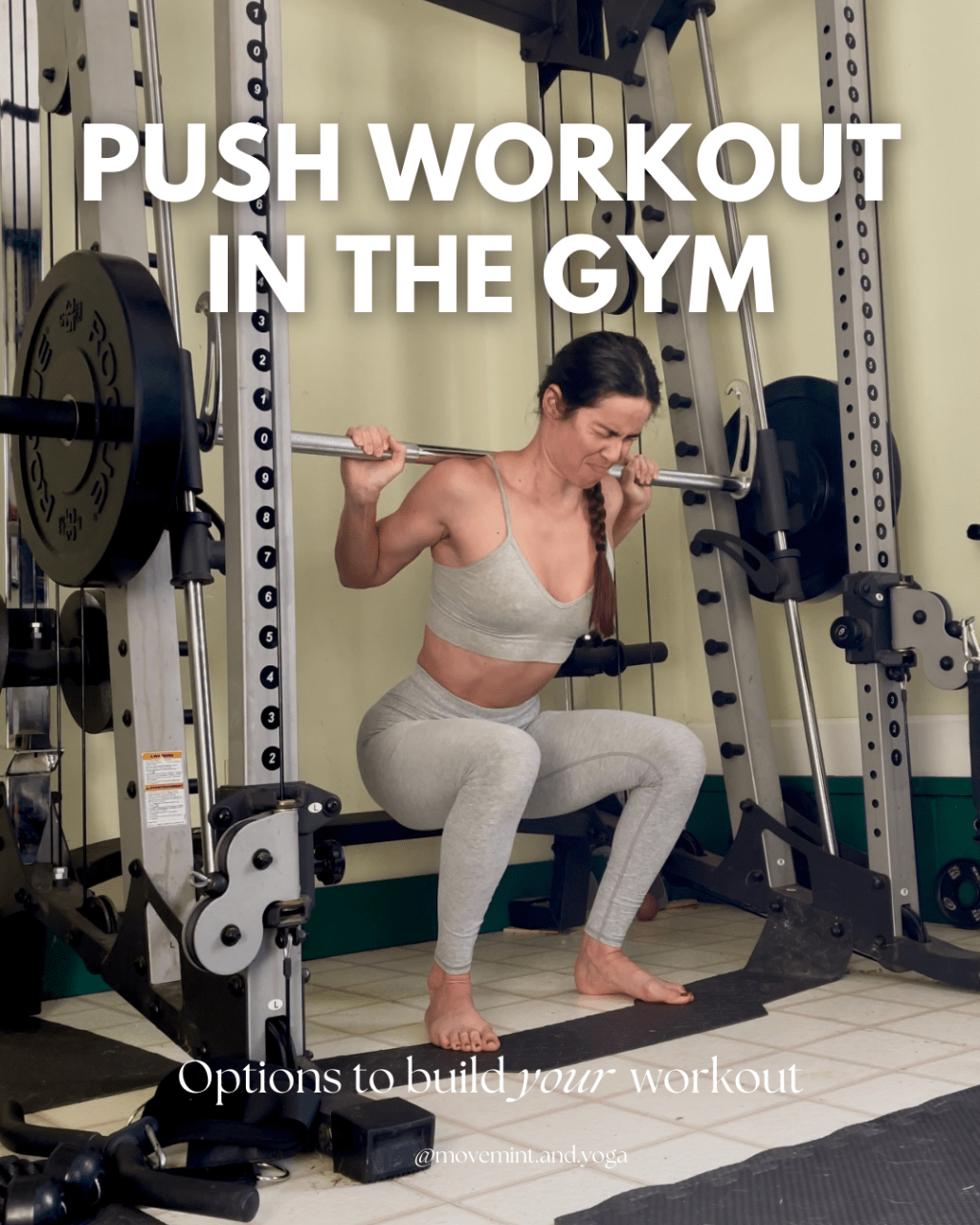
🏋️ 1. Squats for Leg and Core Activation
Yes, squats again. Lower body strength is important for overall health and strength and is a really practical exercise that you can use in life. Don’t go into heavy weight until your body is warm and the muscles are ready for it, but early-ish in the workout means that you will have more energy for this compound movement.
🔹 Beginner:
- Bodyweight squats focusing on depth and form.
- Keep your chest upright and knees tracking in the same direction with your toes.
🔸 Intermediate:
- Add a barbell or dumbbell. There are SO many squat variations, that target slightly different muscles. Should I create a more in-depth guide? ✍️ lmk in the comments.
Pro Tip: Avoid letting your knees cave inward—push them slightly outward as you lower. Use a band if you need an extra reminder!
🦵 2. Hip Thrusts for Glutes and Stability
Strong glutes enhance posture and support pushing exercises by stabilizing your core and lower back—essential for yoga poses like plank and chaturanga.
🔹 Beginner:
- Bodyweight hip thrusts with shoulders supported on a bench or sturdy surface.
- Squeeze your glutes at the top, keeping your back neutral.
🔸 Intermediate:
- Add a dumbbell or barbell across your hips for added resistance.
Pro Tip: Don’t overarch your back, this is the most common thing I see where things go wrong. This is a hinging action with a tight core. If you lose your core at the bottom, reduce your range of motion.
Check out the video for tips!
🤸♀️ 3. Handstand Practice or Overhead Press
Handstands are the ultimate yoga push exercise! Holds facing the wall help with that straight line alignment and endurance. If you’re building strength for inversions, overhead pressing is a fantastic option here as well.
🔹 Beginner:
- Overhead Press with light dumbbells.
- Focus on maintaining a straight line from shoulders to wrists.
🔸 Intermediate:
- Practice Handstand Holds against a wall.
- Keep your chest engaged and actively push through your shoulders.
Pro Tip: Avoid the “banana back” by keeping your core tight, ribs pulling inward, and hips stacked.
🍑 4. Cable Kickbacks for Glutes and Hamstrings
Cable kickbacks target the glutes and hamstrings, supporting lower-body strength and balance. They’re also a great way to complement yoga’s hip-opening stretches.
🔹 Beginner:
- Use light resistance and focus on slow, controlled movements.
- Stand tall or with a slight hinge and avoid arching your back.
🔸 Intermediate:
- Increase resistance for more muscle engagement.
Pro Tip: Keep your movements precise and avoid swinging—quality over quantity!
🧘 5. Full Push-Ups for Upper Body Strength
Yoga often focuses on chaturanga, but when is the last time you pushed all the way up? Adding push-ups to your routine can build the chest, shoulders, and triceps, improving your overall pushing power.
🔹 Beginner:
- Start with incline push-ups against a wall or bench or knee push-ups.
- Focus on form: elbows at a 45-degree angle and core engaged.
🔸 Intermediate:
- Progress to full push-ups or deficit push-ups for an extra challenge.
Pro Tip: Maintain a straight line from head to heels and avoid letting your hips sag or raise into a downward dog-ish position.
🏁 That’s It for Push Day!
Aim for 2–3 sets of each exercise, adjusting reps and weight to your fitness level. Listen to your body and enjoy the process of building strength and confidence.
📣 What’s Your Favorite Push Exercise?
Which of these exercises do you find the most challenging? Let me know in the comments or tag me when you try this workout—I’d love to cheer you on! 💬✨



 Living Wildly Well