On the first sunny day that you don’t need a parka, it’s tempting to head out and start tidying up the garden. But before you grab your leaf blower and trash bags, take a moment to consider that your leaf pile or scrappy garden beds might just be a pollinator paradise in disguise.
From solitary bees to butterflies and beetles, many beneficial insects overwinter in the stems, leaves, and topsoil of your garden. Being sure that they’ve had time to wake up and emerge helps protect biodiversity and ensures your garden stays vibrant and productive all season long.
Here are five easy, pollinator-friendly tips to guide your spring cleanup:
1. Leave Some Stalks & Leaves Behind 🌱
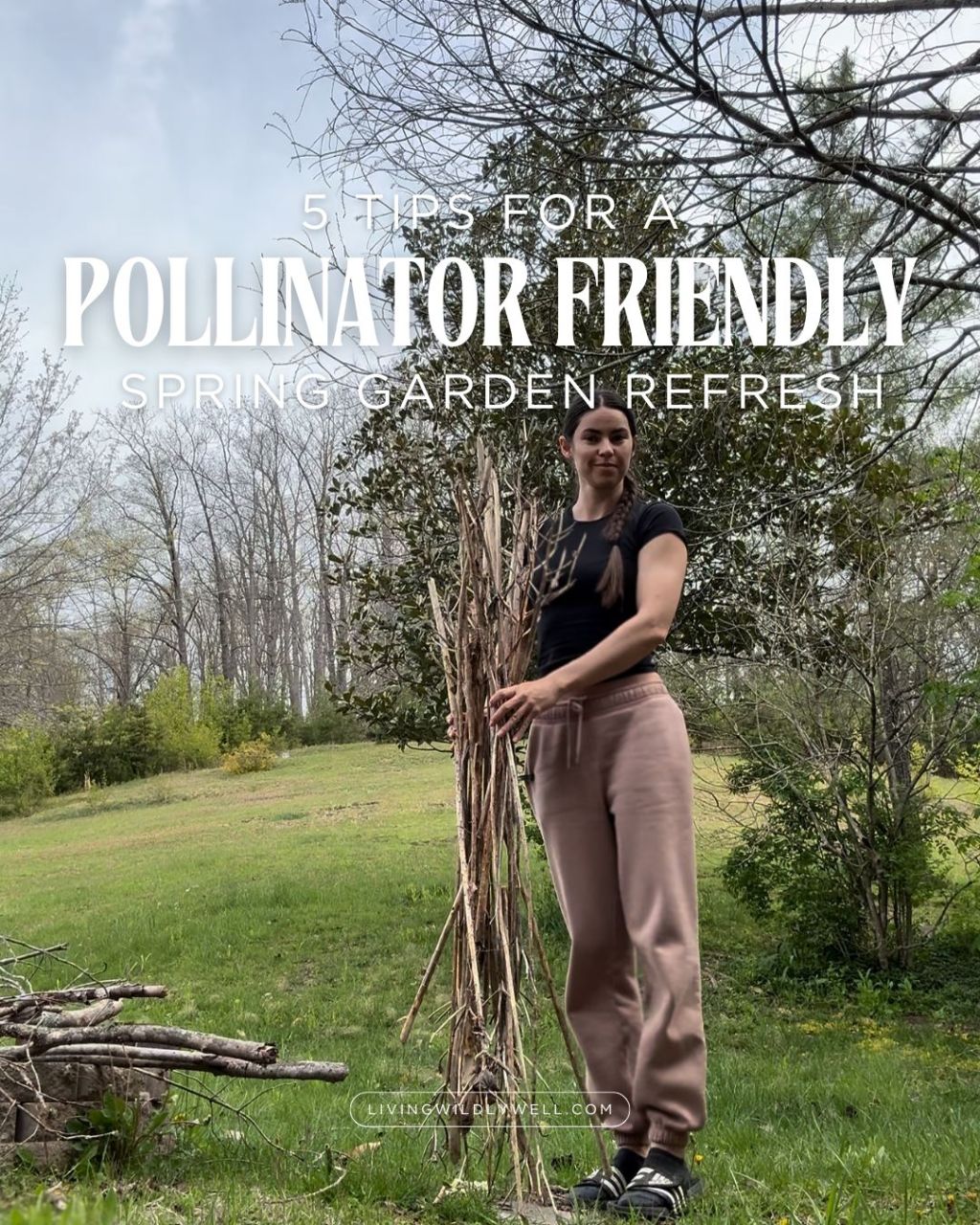
It’s not a mess, it’s a habitat! Last year’s dried stems, leaf litter, and seed heads provide essential shelter for overwintering insects like solitary bees, native moths, and butterfly chrysalises. If you can, plan ahead in the fall to leave a few undisturbed spaces in your yard through winter, and be gentle when cleaning in spring.
Rather than clearing everything at once, tidy selectively. Instead of diving in the moment the snow melts, or on your first sunny day, plan your clean-up in stages. You may have that leaf pile that formed on its own against a door or covering a walkway. Start with high traffic spots, or areas where you’ll be planting cool-season crops, and saving a pollinator-friendly zone or two for a little later.
If you just can’t wait any longer, consider leaving a few stalks standing or moving clippings gently to a compost pile once temperatures are steadily a little warmer instead of immediately throwing them into a trash bag. This gives tiny residents a chance to wake up and fly off.

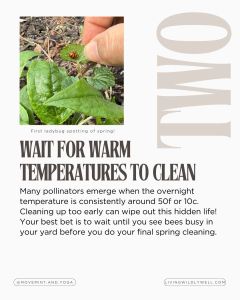
2. Wait Until Daytime Temps Are Consistently 50°F+
Most native pollinators, including bees and butterflies, begin to emerge when daytime temperatures reach around 50°F (10°C). If you start cleaning too soon, you risk disturbing or even killing pollinators that are still tucked away for winter.
Patience really pays off here—let nature wake up on her own time.
3. Plant Native Flowers for Season-Long Bloom
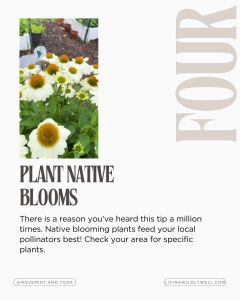
I suspect if you’re anything like me, you’re itching to run to your local nursery to get those greenhouse grown flowers and bring some color to your yard! When you’re planning this year’s blooms, think about what’s native to your region. Native plants tend to be lower-maintenance, more resilient, and best of all, perfectly matched to the needs of local pollinators. Check out regional plant guides or local extension office to see what plants are native to your area.
Aim for a continuous bloom from early spring through late fall. Even just a few well-chosen species can provide a consistent food source and dramatically increase biodiversity in your garden. Plus, more pollinators means better green harvests!
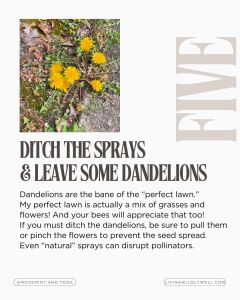
4. Let the Dandelions Bloom (or Eat Them!)
I know, dandelions are the bane of those chasing a “perfect” lawn. But they are often the first food for pollinators in early spring. Letting them flower gives bees a vital nectar source before other plants are in bloom.
Personally, my idea of a perfect lawn is a mix of grasses and flowering plants like clover. If you don’t love dandelions in your lawn, consider harvesting the flowers or pulling the plant from the root, no sprays needed. Many pesticides, even natural ones, can disrupt beneficial insect populations and reduce biodiversity.
Plus dandelion greens are edible and packed with nutrients. You can dry the flowers to make tea. They even sell bundles of dandelion greens at the grocery store. Save some money and get them in your yard! The young greens are best. You can sauté them, toss them in salads, or try them in your favorite spring recipes!
5. Add a Native Bee House
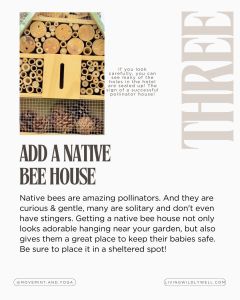
Pollinators need more than flowers. They need homes. Not all bees live in hives! Many native bees, like mason bees and leaf cutters, are solitary and nest in hollow stems, bamboo tubes, or wood with small holes. A simple bee house gives them a safe place to raise the next generation. Place your bee house in a sunny, sheltered spot near flowering plants and a water source. Since they don’t have a hive to protect, they are also usually very gentle and curious creatures. Many that you see don’t even have stingers!
Plus native bee houses are pretty enough to double as garden décor IMHO.
Spring Cleanup Doesn’t Have to Be a Total Tidy-Up
A pollinator-friendly garden starts with small decisions, like leaving the leaves a little longer, choosing native blooms, or skipping the sprays. The best part? These small shifts often make your garden healthier, more self-sustaining, and full of life.
Want to do even more for pollinators this season?
I’ll be sharing how to build your own certified pollinator garden and how these tiny visitors can boost your veggie harvests.
Subscribe so you don’t miss a thing (and don’t forget to confirm your subscription if it ends up in your promo folder)!
Nature has its own rhythm. When we step back just a little, we make space for something amazing to happen.
Are you team leave the leaves this year? I’d love to hear what you’re doing to support pollinators. Leaf 🍃 a comment here or tag me on Instagram!




 Living Wildly Well